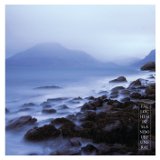
This Island, Our Funeral
Falloch
- Style
- Post-black metal
- Label
- Candlelight Records
- Year
- 2014
- Reviewed by
- Andy
Falloch has gotten a lot of hate in the past for its New-Age metal style, in a way that similar bands have not; it seems that playing music in the style of Alcest, Fen, or Agalloch has led many to think they're just capitalizing on a trend. I won't weigh into that debate, for who knows? Maybe they're really passionate about making metal that sounds like it was created by Enya. But This Island, Our Funeral sure doesn't sound passionate. Or memorable.
Vocalist/guitarist Andy Marshall, whose new project Saor got high marks from us this year, has left Falloch, and with it about 75% of the metal has apparently taken a leave of absence as well. The guitars, such as on Tòrradh, still exist, but are forgettable, and new vocalist Tony Dunn has a high voice -- clean vocals only -- with a sharp edge that sounds like it really belongs on an alternative rock album. There is almost no tune, though about six minutes into the nearly ten-minute song there are some glimmerings of one as Dunn finally gets in harmony with the bassline rather than just singing random "my heart is emotionally crying out" lines while the rest of the band provides background music. The rest of it consists of rushing passages of guitars with lots of oohs and ahhs layered over it either in the front or back -- think Fen at their most self-indulgent, but without the same sound quality, since almost all the instruments, including the lead, are buried under heavily produced layering. For Life is slightly better, but given that the focus is on Dunn's voice, it had better have one killer hook, and it doesn't. What does come clearly through are lots of acoustic passages backed by a synth pad, and more of that is available on For Ùir, which follows it. For Ùir sounds like it could be an Agalloch song if there was more menace in there; there are portions where the guitars sound like they ought to start up with a heavy riff somewhere in there, but everything dies down to more oohs and ahhs, including some from an anonymous female diva.
Even though there is some distortion, that's about all that's there to make one feel like this was a metal album, though Brahan has a few unconvincing screams and tremolo passages on for the listener. Almost immediately after, it all stops and returns to more quiet acoustic bits, though at the end there is a ringing solo as if to make up for all the noodling about. Sanctuary, the last track, gets a little more interesting for a few minutes with a choppy rhythm on the verses by the guitar, but the Achilles heel of every song here are the constant tuneless and out-of-place-sounding vocals, and the songwriting structure, which is always the same: Some lip service to black metal with a few heavy riffs, and then a lot of soft, introspective acoustic portions, always with high-pitched, occasionally-falsetto singing that is layered to the maximum. Sanctuary does bring in some other instruments -- a piano and what sounds like a synth horn here and there, but the layering is such that it's hard to pay much attention to them -- and did the final portion of the song really need to go on with that much wordless vocalizing, for that excessive a length of time? I think not.
Even if one likes the more nature-worshipping, New-Age style of metal popularized in my area of the world, This Island, Our Funeral is still pretty weak sauce by that standard. If the band could write a good tune, or if the vocalist didn't sound so often as though he was about to cry, this could be a lot better, but even fans of this genre should probably just buy the latest Saor album and call it good.
Reviewed by Andy — December 28, 2014