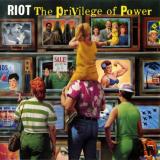
The Privilege of Power
Riot
- Style
- Power Metal
- Label
- Epic Records
- Year
- 1990
- Reviewed by
- Andy
After Thundersteel catapulted Riot from the rock-oriented band of the Rhett Forrester days to power metal legends, fans waited with bated breath for the followup. What they got two years later was The Privilege of Power, an album that indeed contained a lot of the same furious, double-bass-ridden melodies that had made Thundersteel one of the best metal albums ever created -- but unfortunately, also came with some strange experiments that distracted and puzzled listeners. A perpetual underdog whose albums tended to get shortchanged by the labels, Riot fared badly with The Privilege of Power, just before metal lost its mainstream appeal and bands started changing directions. But listened to from the hindsight of 26 years later, the quality of The Privilege of Power is unmistakable; these are great songs by a great lineup, merely obscured by the trappings of a concept-album attempt that didn't work.
So what do you do when you've just knocked it out of the park with the fans, but the record company isn't pushing your album? Stick to the formula, or try something different? In Riot's case, a little of both. The Privilege of Power is a concept album without a whole lot of explanation as to the concept. Almost all the tracks are prepended with spoken-word radio and TV sampling, usually dealing with dark aspects of American history of the 50s and 60s, and some of those samples are a couple of minutes long, sometimes blending into the start of the actual music. They haven't gotten better or more understandable with age, and they rarely seem to have much connection to the tracks, with the exception of the one for Killer -- all are quite annoying. But after that nonsense comes the sort of track listeners have been hoping for, usually: On Your Knees is a worthy successor to Thundersteel tracks, and Metal Soldiers' plodding beat, Tony Moore's screams soaring over the top, is a guaranteed hit with the crowd. The thing that possibly irritated metalheads the most at the time, the horn section, doesn't seem like that big a deal now, but I'll mention it anyway: The band brought in a brass section that added accent to a lot of the tracks, and it does sound a bit strange mixed with the speed-metal fury of the rest of the band. It's pretty tastefully done, but it does give an odd flavor to some otherwise excellent songs.
Perhaps the band couldn't figure out why such a gem as Thundersteel wasn't bringing serious commercial success, and started throwing other contemporary hard rock templates at the wall to see what stuck. That might explain why in addition to the metal awesomeness, we get a power ballad, Runaway; a mid-tempo crooner, Maryanne; and, weirdest of all, Killer, a funky hard rocker filled enough with horns to sound like a big-band hit. The first two are easier to like; power ballads and metal tracks that sound like they ought to be love songs were par for the course back then, and Riot, armed with Moore's terrific voice, has no difficulty pulling them off. Killer's weirder and more ungainly; it's not a terrible song, but it sounds like it belongs on a completely different album. Compensating for that are the best two tracks on the album, Dance of Death and Storming the Gates of Hell, Painkiller-style screamers that both rip viciously into eardrums. Yes, there are horns on Storming the Gates of Hell, too -- but they're battle horns, combined with some of founding guitarist Mark Reale's better riffs.
The Privilege of Power wasn't Riot's best album, suffering arrangement-wise due to directional confusion on the part of the band -- even Johnny, the band mascot who reprises his role on Black Leather and Glittering Steel, sounds unsure if he made the right decisions after all. But there's no doubt that it was also unfairly underrated due to coming on the heels of the band's classic, and a listen will quickly confirm to any fan that the songs on the album stand the test of time. Just skip ahead about 70 seconds on most of the tracks to get past the spoken-word bits, and enjoy the album.
Reviewed by Andy — September 26, 2016