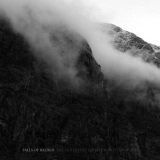
The Light That Dwells In Rotten Wood
Falls of Rauros
- Style
- Blackened Post-Metal
- Label
- Morbid Winter Records
- Year
- 2011
- Reviewed by
- Jake
People make fun of metalheads for making genres out of absurdly long strings of words, and bands like...oh, let's go with “progressive blackened folk post-metal” outfit Falls of Rauros aren't helping. But never let it be said that FoR do nothing for us, because they do provide us with some pretty interesting albums. Their latest, The Light That Dwells in Rotten Wood, is an appealing blend of quasi-ambient mid-tempo riffing, dirge-like seesaw folk melodies and shockingly spare atmospheric vocals. Though it evokes styles from Opeth-like prog to black metal to folk, it really belongs alongside the bands of the mostly instrumental post-metal scene. It's not about riffs or ideologies; it's about soundscapes and haze.
A song-by-song analysis isn't gonna help you much; these tracks range from two minutes to twelve and don't really give the impression that they're meant to stand alone. The highlight, Awaiting the Fire or Flood That Awakes It, boasts a great lead melody that gives it enough of an identity to be enjoyed on its own (that is, if you're into thirteen-minute songs), but it's given its grandiosity by its context, as are the rest of the tracks. They're certainly distinct, but their real dramatic flow is only to be had if the album is taken as a whole.
Taken that way, though, The Light That Dwells In Rotten Wood succeeds splendidly. Alternating between the rainy-day melancholy of the roaring distorted passages and the somber, earthy folk of the quieter moments gives the whole creation an epic sweep that lives up to the obscure Tolkien reference in the band name, and conjures the smell of wet mulch and the force of cold wind, if you're the type that goes for tone poetry. Don't even try to pick out the lyrics, even if you're a seasoned brutal-voice-interpreter; I'm not even sure the frontman is articulating them. They surely don't matter. He intones instead of preaching, letting his his screech widen and thin and echo through the music's windy chambers.
If I seem weirdly pseudo-poetic here, it's because this is fundamentally an evocative album. It's not a game-changer or envelope-pusher, really, except insofar as it weds the slightest black metal influence to the structure of a Pelican album. Its accomplishments are purely emotional, and of the kind best described by memories of saltwater air and dead trees.
Reviewed by Jake — July 18, 2011