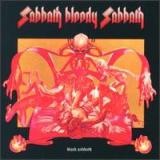
After the seething bad trip that was Vol.4 (The likes of Wheels Of Confusion is arguably Black Sabbath at their sludgiest) the Birmingham foursome decided to try a different tack. Enter Sabbath Bloody Sabbath, the start of a more progressive, experimental direction, that, for better or for worse, would lead us to Technical Ecstasy and Never Say Die. At this point, however, the Sab Four still had their shit reasonably together (musically at least, the band were still on the brink of a full-on burnout), and hadn't forgotten that they were, first and foremost, a heavy metal band. The result is an album that bounces all over the place, from familiar doom metal, to upbeat hard rock, to whatever the hell Who Are You is. Aside from the title track, Sabbra Cadabra and possibly Spiral Architect, this is fairly obscure stuff that remains unknown territory to the casual Black Sabbath fan. To those prepared to delve a little deeper, however, there's as much strong stuff here as any of their first four albums, and indeed, it's among my personal favorite Black Sabbath releases.
We kick things off with the title track, a bona-fide metal classic and easily the most traditional track here, yet even its' crushing weight is balanced with pretty acoustics. The song climaxes with Tony Iommi hammering out one of his most crushing riffs, the kind that puts most doom and sludge bands to shame even today. It doesn't hurt that he's backed up with a far more powerful production than the soggy sounds of Vol.4, either. Although it's never quite been up there with Paranoid or Iron Man in the pantheon of Black Sabbath “hits”, it's still one of their more famous tracks, and I'd wager 90% of you reading this will have heard it. The criminally underrated A National Acrobat follows, all odd riffs and typically stupendous drumming from Bill Ward. It's a great shame that this is a track most well known for being badly mangled by Metallica on their somewhat inconsistent Garage Inc. release (Bill Ward shows Lars Ulrich to be perhaps the most inept drummer ever to play in one of the world's biggest rock bands), as it may even surpass the title track. The track also holds a great personal significance to me, as one of my earliest memories is being sat on the floor listening to this track being played. The album as a whole was something otherworldly to me as a child (and what impressionable child wouldn't be entranced/terrified by that nightmarish cover?), and of course, the music contained within was every bit as mysterious. Oh, I almost forgot to mention that Iommi plays an absolute blinder of a solo on A National Acrobat, too.
And with our third track, the rather ridiculously-titled Fluff, we enter a more diverse part of the album, heading the bouncy Sabbra Cadabra. This is Sabbath at their cheeriest and straight-up rockin', the song even featuring some bar-room piano work from none other than Yes man Rick Wakeman. The song shouldn't really work, coming from a band who were pretty much the heaviest thing going at the time (and, to be honest, the sheer weightiness of those first four albums wouldn't be topped for a good time yet). Yet it does, and it seems to have become a fan favourite in recent years.
Indeed, one of the most notable features of Sabbath Bloody Sabbath is its ability to make even the most unlikeliest of songs work. Who Are You is Ozzy Osbourne's first major contribution to the band, and it's one of the strangest songs in the Black Sabbath catalogue. There's nary a guitar in sight, the song propelled by a somewhat naïve keyboard melody provided by the Ozzman himself. Despite the absence of any crushing riffage, the song's still indubitably Black Sabbath due to the familiar paranoia of Geezer Butler's lyrics and the general sinister, sloth-like pace of the whole thing. Looking For Today is the band's “pop” song, and to me it always sounds like the title track's infinitely cheerier younger brother, though that's probably more due to the acoustics of the chorus.
And finally, the band have saved their most epic number for last. Spiral Architect sees the band pulling out all the stops, writing a symphonic prog-metal anthem (that manages to fit itself into 6 minutes!) that makes for a wonderfully grandiose climax to this record, and indeed, a record born out of difficult times for the band. By this point, knocking out five records in three years without a break, coupled with frightening levels of substance abuse were taking their toll, with various band members beset with health trouble during this period. And perhaps its for this reason that Sabbath Bloody Sabbath is a triumph. It's simply an insane masterwork, music made by people digging deep and coming up with the goods. You could argue that my particular affection for the album is purely sentimental, and it's true that perhaps this album wouldn't be my favorite Sabbath release if I hadn't grown up with it. However, it's still as much of a bona fide classic at their first four releases, and a must-have addition to any self-respecting metalhead's collection.
Reviewed by James — May 4, 2009