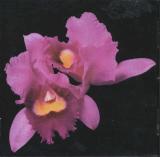
Orchid
Opeth
- Style
- Opeth Metal
- Label
- Candlelight Records
- Year
- 1995
- Reviewed by
- James
Opeth have certainly come a long way since Orchid. Their debut still feels like a band who haven't found their voice yet, quite literally in the case of Mikael Akerfeldt. His bestial roars are a little higher and closer to a shriek at this point, and he hasn't quite developed the rich baritone clean vocals he'd employ more on later albums. There's a little bit of black metal influence here too, and coupled with the acoustic passages it occasionally feels like a melodeath band who've listened to Bergtatt one too many times. The folk influence is also far stronger here than on future releases (just listen to the riff that opens In Mist She Was Standing).
The progressive metal juggernaut we see today are almost a completely different band from the one who cut Orchid (Only Mikael Akerfeldt remains from the Orchid line-up today). Early Opeth works in a slightly different manner to the way they do today. The riffs are built more around the counterpoint melodies of Akerfledt and Peter Lindgren's guitars rather than the tritone chords we'd see from My Arms, Your Hearse onwards. While not a true melodeath band, Opeth certainly wouldn't have looked too out of place alongside the original Gothenburg set. The band set themselves apart by writing long, complex songs, but at this point they hadn't quite mastered their art. There's nothing approaching song structure in the slightest here, each piece of music being a collection of riffs and acoustic passages that while certainly well written and charming in their own way are quite startlingly incoherent. Every song is so twisty and turny that you'll be hard pressed to take anything in upon first listen. And indeed, several listens later I am still incapable of telling songs apart. While certainly not Opeth's weakest (that somewhat dubious accolade goes to Deliverance, though that too is a fine album in its' own right) it definitely is their most inaccessible, the reason it'll never be a fan favourite. Only Under The Weeping Moon has really endured, the band having recently started playing it live again, despite a rather lengthy section where nothing much really happens.
Of course, there's a reason I'd rather listen to My Arms, Your Hearse or Still Life. Other than the songs' steadfast refusal to make any sense, the whole thing feels a bit well, unfinished. The production job, courtesy of Dan Swano, is a bit squashy and distant, particularly the vocals. Indeed, a studio mishap left acoustic interlude Requiem cut in two, the second half appearing as an intro to The Apostle In Triumph. For a band as complex as Opeth, the slightly low-budget feel doesn't fit.
But there is definitely a lot to love about Orchid, perhaps because it feels like a bit of an anomaly in their discography. Silhouette is an odd classical piano piece that sounds like the sort of thing Sigh put on their records. There's lots of little odd details that keep it interesting, like the bass breaks on The Twilight Is My Robe, or the Garm-esque chanting on Forest Of October.
So while it's not the best place to start with Opeth, it's certainly a worthy purchase for any fan of the band. It's embryonic and unfinished, but it still has some fantastic moments, and a must-have for anyone wishing to hear the roots of the prog-death titans.
Reviewed by James — August 3, 2008