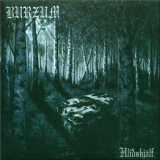
Hliðskjálf
Burzum
- Style
- Dark Ambient
- Label
- Misanthropy
- Year
- 1999
- Reviewed by
- James
Until the recent announcement of Belus, Hlidskjalf seemed like it was going to be the ignoble end to the Burzum. The second of the two keyboard albums Varg released from behind bars, it's a slightly more accomplished work compared to the infamously amateurish Daudi Baldrs, Varg having access to MIDI technology this time around to create a more layered album. As with every ambient composition by Burzum, it's got its share of fans, but compared to say, Channeling The Power Of Souls Into A New God, the pieces contained here smack of Varg making music merely to pass the time, rather than due to any surge in creativity. Take opening track Tuistos Herz for example. The melodies are suitably stirring, but there's no real soul or atmosphere there, and considering, like many tracks on Hlidskjalf, it breaks the six and a half minute barrier, the song rapidly runs out of steam. And when even the best song here is two minutes of good music stretched out to nearly seven, it's clear Varg's creative well had run dry.
Still, at least some effort went into Tuistos Herz. Ansuzgardaraiwo represents the absolute nadir of Burzum's career, consisting of one annoying grinding chord repeated ad nauseum for nearly five minutes that feel like hours. Elsewhere, Die Liebe Nerpus is bad videogame music, the tune sounding like it took less time to think of than the song does to play. And considering that this album was intended to be a lofty concept work detailing the saga of the Norse gods, featuring a lengthy booklet explaining the story behind each song, it's worrying that the pieces here are completely devoid of atmosphere. I should be thinking of mighty warriors and gods when I hear this album, not B-list RPGs of the 90s. Around this point, Varg's music had taken a backseat to his pagan ideals, and Hlidskjalf feels like an attempt at taking his newfound interest to a fanbase by and large disinterested in the long, sprawling tracts he published from his cell. Indeed, if an album needs a lengthy booklet to tell its audience what they should be feeling, has it not failed as a piece of art?
Where as the first four Burzum albums felt like towering, imposing monoliths in the world of black metal, the music contained within feeling like genuine pieces of metal history to today's ears, Hlidskjalf feels... inconsequential. The main riff of Det Som En Gang Var is permanently tattooed on the eardrums of black metal fans worldwide, but ask them to recall say, Der Tod Wuotans, and they're likely to look at you non-plussed. The best you can hope for from Hlidskjalf is an interesting curio, a footnote in Varg's tale, and about halfway through it exhausts even that. It's not entirely awful, it's just pretty much devoid of merit, and considering the shadow this man still casts over metal as a whole, that just isn't good enough. On the plus side, Hlidskjalf is so minor in comparison with the rest of Burzum's oeuvre, that Belus, if it's up to scratch (and this is a big if for a man who's been silent for ten years or so), will have a relatively easy job of restoring the good Burzum name in the dark heart of many black metal fans.
Reviewed by James — March 7, 2010