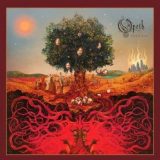
Heritage
Opeth
- Style
- Progressive Rock
- Label
- Roadrunner Records
- Year
- 2011
- Reviewed by
- Aleksie
Killing songs: All of 'em
Through nine studio albums, Opeth has created the kind of back catalogue that
probably has left many fans just hoping that they maintain a certain type of excellence
in quality, mixing in the technical yet occasionally raw death metal with proggy
overtones and haunting mellow atmospheric. With their tenth “observation”,
Heritage, it’s blatantly apparent that main man Mikael Åkerfeldt and
the current O-crew needed something completely different. Well yeah, not completely,
but my how the most puritan followers are going to dismiss this doozy.
First off to make the album’s biggest already-well-leaked-in-interviews point perfectly clear: there are no growls or death metal vocals of any kind. Not a single guttural burp, hoarse shout or strangled-throat sentence can be found here. Conversely, Åkerfeldt is letting his clean vocals soar and creep on a very grand scale and it is very cool to hear.
A similar transformation has occurred on the musical front. Straight-up metallic elements are all but gone. There is still plenty of heaviness (this record is NOT Damnation part 2) to be found in both riffs and the signature-style ghostly vibes that many of the mellow moments send out to tingle on our spines. But the overall sound has taken a deep turn towards several elements from the 1970s – most notably the progressive rock, acoustic folk, jazz and hard rock stylings of the era.
Usually when I get the chance to review a record with the AOTY-mark blazed onto it, I tend to go the song-for-song breakdown but here, I don’t want to. The most splendid quality on Heritage is the continuous turnout of surprises and I don’t want to be specific with the spoilers for those who have not had a privilege of press promos or downloaded the disc prior to the official release.
I will however run down some of the aforementioned elements in general detail without referencing specific songs, so that specific surprises remain. While Opeth being drenched in prog is surely not a surprise in itself, the depth of it is. At times the hazy yet heavy churning is like Pink Floyd on a blistering diet of creatine. King Crimson naturally lingers in the background from time to time. When the acoustic guitars become more prominent (an enjoyable amount of the riffage is actually done with acoustics), it’s Jethro Tull in the house like a physical lover of the maternal entity. During the most hard rocking parts, you can’t miss the Rainbow-leanings. One of the songs (and when listening it’s pretty easy to tell which) is actually a straight-up tribute to Ronnie James Dio, as Åkerfeldt has said himself. The jazzy and even momentarily funky sections can remind me of Herbie Hancock in one moment and Swedish jazz master Jan Johansson (yes, father of Jens and Anders) the next. Beautiful moments of a piano going solo create soothing contrasts.
Mellotrons and Hammond-style organs are all over the place to create a wonderful vintage atmosphere along with the old school and rough yet great production job. Deep Purple-fans should grin from ear to ear several times when listening through. The heaviest awesomesauce moment comes when a downright doomy, distorted pound is layered with organs and a flute solo. Hand percussions are brought in for a slight world music flavour. So did I mention this sucker is a versatile beast?
The band puts in a stellar performance with plenty of groove and guitar solos (ranging from melodically rocking to downright fusionesque, Allan Holdsworth-style) while I’d say that instrumentally I was most impressed with drummer Martin “Ax” Axenrot. For a guy who has taken considerable flack (from the most dedicated Martin Lopez-fans and maybe otherwise too) for being “just a metal drummer” who grinds out blast beats and doesn’t knows how to properly vary his playing, he displays a helluva lot of dynamics here, really restraining the shuffle when needed and letting the rhythm crush at other times. Although no, hardest metalheads, there are no blast beats here either.
Fhew. You think you got my drift yet. In any case, I’m pretty confident that throughout my 7+ years of writing for MR, it’s become very clear that I’ve got a pretty serious case of prognerditis. Hence a change in sound like this is logically exhilarating for me, even though I love the metallic Opeth as well. With similar logic, I can also understand if those listeners wanting a heavier extreme of Opeth are severely disappointed with this. Tough beans, I guess. Åkerfeldt has already said in interviews that this does not mark the ultimate end of a “metal-Opeth” or that growls & such would be forevergone for him. They just weren’t the thing this time around. For those whose sentiment when listening through this would be along the lines of “meh, this and this contemporary and suitably obscure band does music like this a lot better”, then gawdaamn, I demand you go to the comment section to tell me what are these apparently amazing bands.
Opeth is truly a band with few equals for me in the sense that they have not just been able to avoid a bad or even mediocre studio release throughout their career, but in many ways they’ve just gotten better with each new one. Sure, there are times when say Blackwater Park or Dude, Where’s My Arms, Your Hearse (cheers to ruthlessreviews.com for that one) or Ghost Reveries feels like the best. But regardless of this ever-changing sentiment, I feel that Heritage is certainly one of Opeth’s crown jewels and one of the (maybe eventually even the) best albums of 2011.
First off to make the album’s biggest already-well-leaked-in-interviews point perfectly clear: there are no growls or death metal vocals of any kind. Not a single guttural burp, hoarse shout or strangled-throat sentence can be found here. Conversely, Åkerfeldt is letting his clean vocals soar and creep on a very grand scale and it is very cool to hear.
A similar transformation has occurred on the musical front. Straight-up metallic elements are all but gone. There is still plenty of heaviness (this record is NOT Damnation part 2) to be found in both riffs and the signature-style ghostly vibes that many of the mellow moments send out to tingle on our spines. But the overall sound has taken a deep turn towards several elements from the 1970s – most notably the progressive rock, acoustic folk, jazz and hard rock stylings of the era.
Usually when I get the chance to review a record with the AOTY-mark blazed onto it, I tend to go the song-for-song breakdown but here, I don’t want to. The most splendid quality on Heritage is the continuous turnout of surprises and I don’t want to be specific with the spoilers for those who have not had a privilege of press promos or downloaded the disc prior to the official release.
I will however run down some of the aforementioned elements in general detail without referencing specific songs, so that specific surprises remain. While Opeth being drenched in prog is surely not a surprise in itself, the depth of it is. At times the hazy yet heavy churning is like Pink Floyd on a blistering diet of creatine. King Crimson naturally lingers in the background from time to time. When the acoustic guitars become more prominent (an enjoyable amount of the riffage is actually done with acoustics), it’s Jethro Tull in the house like a physical lover of the maternal entity. During the most hard rocking parts, you can’t miss the Rainbow-leanings. One of the songs (and when listening it’s pretty easy to tell which) is actually a straight-up tribute to Ronnie James Dio, as Åkerfeldt has said himself. The jazzy and even momentarily funky sections can remind me of Herbie Hancock in one moment and Swedish jazz master Jan Johansson (yes, father of Jens and Anders) the next. Beautiful moments of a piano going solo create soothing contrasts.
Mellotrons and Hammond-style organs are all over the place to create a wonderful vintage atmosphere along with the old school and rough yet great production job. Deep Purple-fans should grin from ear to ear several times when listening through. The heaviest awesomesauce moment comes when a downright doomy, distorted pound is layered with organs and a flute solo. Hand percussions are brought in for a slight world music flavour. So did I mention this sucker is a versatile beast?
The band puts in a stellar performance with plenty of groove and guitar solos (ranging from melodically rocking to downright fusionesque, Allan Holdsworth-style) while I’d say that instrumentally I was most impressed with drummer Martin “Ax” Axenrot. For a guy who has taken considerable flack (from the most dedicated Martin Lopez-fans and maybe otherwise too) for being “just a metal drummer” who grinds out blast beats and doesn’t knows how to properly vary his playing, he displays a helluva lot of dynamics here, really restraining the shuffle when needed and letting the rhythm crush at other times. Although no, hardest metalheads, there are no blast beats here either.
Fhew. You think you got my drift yet. In any case, I’m pretty confident that throughout my 7+ years of writing for MR, it’s become very clear that I’ve got a pretty serious case of prognerditis. Hence a change in sound like this is logically exhilarating for me, even though I love the metallic Opeth as well. With similar logic, I can also understand if those listeners wanting a heavier extreme of Opeth are severely disappointed with this. Tough beans, I guess. Åkerfeldt has already said in interviews that this does not mark the ultimate end of a “metal-Opeth” or that growls & such would be forevergone for him. They just weren’t the thing this time around. For those whose sentiment when listening through this would be along the lines of “meh, this and this contemporary and suitably obscure band does music like this a lot better”, then gawdaamn, I demand you go to the comment section to tell me what are these apparently amazing bands.
Opeth is truly a band with few equals for me in the sense that they have not just been able to avoid a bad or even mediocre studio release throughout their career, but in many ways they’ve just gotten better with each new one. Sure, there are times when say Blackwater Park or Dude, Where’s My Arms, Your Hearse (cheers to ruthlessreviews.com for that one) or Ghost Reveries feels like the best. But regardless of this ever-changing sentiment, I feel that Heritage is certainly one of Opeth’s crown jewels and one of the (maybe eventually even the) best albums of 2011.