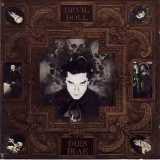
Dies Irae
Devil Doll
- Style
- Gothic Progressive Metal
- Label
- Hurdy Gurdy Records
- Year
- 1996
- Reviewed by
- James
Italy seems to have produced its fair share of esoteric horror-prog acts over the years, with perhaps the most infamous of all these acts being the legendary Devil Doll. Formed in 1987 through a cryptic newspaper advertisement by the Slovenian-born Mr Doctor, Devil Doll have left behind a legacy of polished symphonic prog, with releases often only available in limited quantities (only one copy was made of debut Mark Of The Beast). The shadowy figure behind them, Mr Doctor, is a master mythmaker, and as such it's impossible to entangle the true history of the band from the tapestry of bizarre anecdotes surrounding them. Take, for instance the story behind Dies Irae. According to Mr Doctor, the original Dies Irae was lost in a fire that nearly killed the man himself, eerily paralleling the plot of a film of the same title Mr Doctor had viewed, dealing with a composer working on a piece entitled, funnily enough, The Day Of Wrath (The English translation of Dies Irae, if you weren't aware). I've yet to find any proof that this film actually exists, mind. Believing the work to be cursed, Dies Irae was initially only available as 20 books of sheet music passed around close associates of the band. Until eventually, in 1996, the band regrouped to record an amended version of Dies Irae. A tall tale indeed, and one that only particularly naïve readers are likely to believe. Still, it adds to the sense of campy horror that makes Devil Doll one of the more interesting bands of our time. The music of Devil Doll is akin to that of an old 30s horror film, one where you can see the strings on the skeletons. Yet it's part of their charm, and it's difficult to believe tongues aren't wedged firmly in cheeks when listening to Dies Irae. It may not be their most ambitious work (that honour goes to the 80-minute long Sacrilege Of Fatal Arms) but it's certainly their most accomplished, the band working with musicians from the Slovenian Philharmonic Orchestra. As with every other Devil Doll release bar Eliogabalus it's comprised of one lengthy track, a brew of sweeping gothic symphonics and bursts of progressive metal. The combination of soaring strings and 80s cock-rock riffs probably shouldn't work as well as it does, but Mr Doctor certainly has an impressive talent for holding it all together. Speaking of Mr Doctor (and Devil Doll really is his baby) the other thing his work in known for, apart from the bizarre backstory, is Mr Doctor's unconventional approach to singing. He utilizes the technique of sprechgesang, a style most commonly used in German Expressionist opera of the early 20th Century. Through the piece's 45-minutes, Mr Doctor growls, mutters, cackles and whispers. His heavily-accented vocal theatrics fit perfectly with the rest of the album, although they're probably not to be taken seriously. Despite this, some listeners find them profoundly disturbing. Your mileage may vary however, as some find them akin to a Monty Python routine. As I've said, it's really too laced with B-Movie vibes to be truly unsettling, although there's a good chance you'll jump at the shrieks and stabbing violins of the part known as The Incubus (Part 12, if yours is the version divided into tracks. Mine isn't), a piece of music spliced in to deliberately unnerve the listener.
Dies Irae may not be as impenetrable as you'd expect, however. Despite it's imposing length and gothic trappings, there's a strong sense of melody, Mr Doctor clearly having put a great deal of thought into composing the piece, and I'm sure you'll find enough ear candy in your first listen to keep you coming back for more. There are some astonishingly powerful moments on Dies Irae, for instance, the part at the end of The Incubus where Mr Doctor plays dictator, ranting and raving like a man possessed over a roaring crowd and rising strings. It's still not an easy listen, large parts of it requiring the darkened room and headphones treatment. The metal segments aren't all that common, but it makes bits like the galloping guitar break that prefaces The Incubus that bit more powerful. There's more to Devil Doll than just being a humdrum goth metal band. That said, they still make the time to fit in the usual female soprano vocals, having some great interplay with Mr Doctor's scenery chewing. Indeed, it's nice to see a more melodic approach to the vocals, and Mr Doctor would no doubt get exhausting in too large a dose.
Dies Irae is easily one of the more challenging releases to quote. It's sprawling and confounding, despite the fact that it's respective parts are all fairly accessible and flowing. Yet the sum of those parts is a baffling piece of work, though one that no doubt makes perfect sense in the twisted head of Mr Doctor. It's undoubtedly a good album, though precisely why it's good is harder to pin down. By the end of the piece, you'll no doubt be asking yourself “OK, what was that all about”. Yet you'll find yourself coming back for more. And that's Mr Doctor's talent, to entertain while keeping his work utterly head-scratching. And despite the fact that at a glance it looks just a little silly, maybe there is a little bit of black magic in Dies Irae after all.
Reviewed by James — December 14, 2009