Dark Side Of The Moon
Pink Floyd
- Style
- Classic Progressive Rock
- Label
- Capitol Records Inc.
- Year
- 1973
- Reviewed by
- Jeff
On March 24th, 1973, Pink Floyd released what many consider the ultimate masterpiece in progressive rock. "Dark Side Of The Moon" was a landmark album for its time. It included sounds never heard or played before and production techniques no other bands had ever used. It's an album that has stood the test of time well. It has reached the ears of numerous listeners from different generations for the past for 36 years. It's longevity on the billboard charts, (15 years straight plus another 2 after the remaster was released) is a testament to the impact this piece of work has had on people. It has sold over 40 million copies worldwide and still counting. "Darkside Of The Moon" is without a doubt Pink Floyd's ultimate musical creation.
"Dark Side Of The Moon" was an expression of philosophical, political and humanitarian empathy that was desperate to get out. It was a very creative time for the band. They were in total sync with one another musically and were able to work towards a common goal. The ideas that were being explored back then still have relevance today. "Dark Side Of The Moon" marked the starting point where progressive rock went mainstream. It had alot of traditional pop values yet took you on an imaginative journey unlike no other.
When Sid Barrett left Pink Floyd, David Gilmour joined and the music became more complex. The writing went from simple songs to those that were more soundscape and grand. The song "Echoes" from the album "Meddle" was over 20 minutes in length and marked the musical direction Pink Floyd were heading in.
"Dark Side Of The Moon" was a concept album that included themes about living in the modern world. Most of the musical ideas that ended up on the album were created from jams the band did during rehearsals. Roger Waters was responsible for all of the lyrics.
Many of the sound effects that are used throughout the record can be heard at the very beginning of "Speak To Me/Breathe". The piano chords on this song were inspired by Jazz legend Miles Davis. The double tracking harmony vocals by David Gilmour give the song a dreamy feel. Hammond B-3 organs also add another dimension to the song.
The key instrument used on the track "On The Run" is a synthesizer with a built in sequencer. It was one of the first of its kind. A series of notes would first be played slowly, triggering a noise generator and oscillators, then speed up. It is very futuristic sounding. '"On The Run" was actually a sonic experimentation and preview of the future of progressive rock. There's alot going on in this song; hi hats, backwards guitar sounds with echo effects, synthesized parts, footsteps, voices, etc. The mixing of this track was a performance in itself. All of the band had a hand in simultaneously mixing this recording.
The sound effects of clocks heard on "Time" were all recorded manually using multiple tape recorders. This truly represented the type of difficult recording techniques used to create something that the digital age of today would have made much easier. Each tape recorder was synched with the help of stopwatches and hand signals. "Time" was also the first track on the album that introduced the use of four female backing vocalists whose style was very gospel and blues based.
"The Great Gig In The Sky" was a piano/organ composition originally written as an instrumental.. The female vocals on this track are totally improvised, courtesy of Claire Torry. There are no lyrics sung. She belts out alot of whoas and ahs. The range and control of her vocals are outstanding.
"Money", a song about success, might be considered Pink Floyd's first commercial FM radio breakthrough. Sound effects like cash registers opening and closing, the clanking of change, stock market tickers, etc. easily identify the song as soon as it starts. The time signature is very unusual, 7/8 time. The saxophone solo is performed by Dick Parry.
"Us And Them" was a piece of music originally written in 1969. A very different version of the music as an instrumental was used during the violent sequence in a film called "Zabriskie Point". Lyrically the song asks us if the human race is capable of being humane. The song has such a soft touch and feel to it. The spoken voices on this track were provided by various people in the studio. The band wrote questions, which when answered by the people being interviewed, were recorded and used throughout the song. This idea brought out a certain "dark side" to the album.
The last three tracks on "Dark Side Of The Moon" bring the album to it's climax. "Any Colour You Like" is an instrumental that further explores the use of synthesizers, which would become a predominant instrument on their next two albums, "Wish You Were Here" and "Animals". "Any Colour You Like" is a prequel to "Brain Damage", a song that deals with the madman inside of all of us. "You lock the door and throw away the key. There's someone in my head but it's not me". The album ends with "Eclipse"; a song that perfectly ends the album. The vocal harmonies, the beautiful guitar work and the amazing organ playing give the album a spectacular ending .
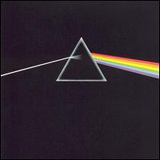
The cover of "Dark Side Of The Moon" is probably to most recognizable album cover of all time. It depicts a prism refracting one beam of light into a spectrum of colors. It also represents the light show Pink Floyd used in concerts as well the lyrical themes found within the songs, (such as ambition and greed).
"Dark Side Of The Moon" touched people in ways no one could imagine. It has something that everyone could relate to. It was a grim record lyrically with music that was uplifting yet compelling. It is an album that every fan of progressive rock music should have in their collection.
Reviewed by Jeff — October 8, 2006