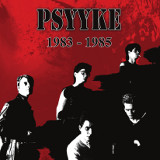
1983-1985
Psyyke
- Style
- Gothic Post-Punk
- Label
- Svart Records
- Year
- 2014
- Reviewed by
- Andy
After a few weeks of reviewing some bigger names in the metal world, I decided to review some more obscure artists. And who could be more obscure than Psyyke, a Finnish gothic post-punk band that was weird enough even for their chosen genre that it couldn't get signed until it moved away from that genre? Svart Records has now released a compilation of nothing but their early work, appropriately titled 1983-1985. They're all demos except for two from a single, and all are sung in Finnish.
It's certainly raw enough. Temppeli is melodic, but not in the vocal area; Jallu, their vocalist, roars his vocals, but so smoothly on the chorus that it sticks in the listener's head, and the tune has a compelling darkness to it. Neondertal and Vallanloppu, on the other hand, are crazily psychedelic but don't evoke that darkness; they definitely lean more towards a more shoutable, rhythmic side of punk. The distortion is minimal on the guitars, and there are electronic keyboard elements that keep intruding, though they're often a pleasant surprise, as on Soi, Pianoni, which is a bit darker and features a prominent bass line carrying the melody through the whole song. The buzzing bee of a synthesizer starts getting more prevalent in Hiljaiset Tunnit, where the guitars turn off almost completely and let the keyboard and bass take over. The drums, too, sound electronic, though I can't tell if they actually are or if it's just the remastering.
Sininen Moskeija is completely different, though. It's a slow, ringing song with Jallu singing in a faraway voice and lots of noisy and distorted, but slow, guitar picking in the background. Aivokuolema 1 and 2 are darkly weird and fit perfectly with the post-punk gothic sound Psykke seeks to achieve, but a number of the tracks are a bit more stock and sound like what they were: Demos put out by a punk band feeling their way to popularity in a scene that was already vibrant. Noidat, for instance, has very little gothic darkness in it and concentrates mostly on simple chord-blasting.
Overall, this would be a hard record to strongly recommend to most metal fans, but there are still some good songs on 1983-1985, and those who are really interested in the early days of dark post-punk should probably check it out.
Reviewed by Andy — July 27, 2014